
Earn the Weight: Why Movement Quality Matters in Strength Training
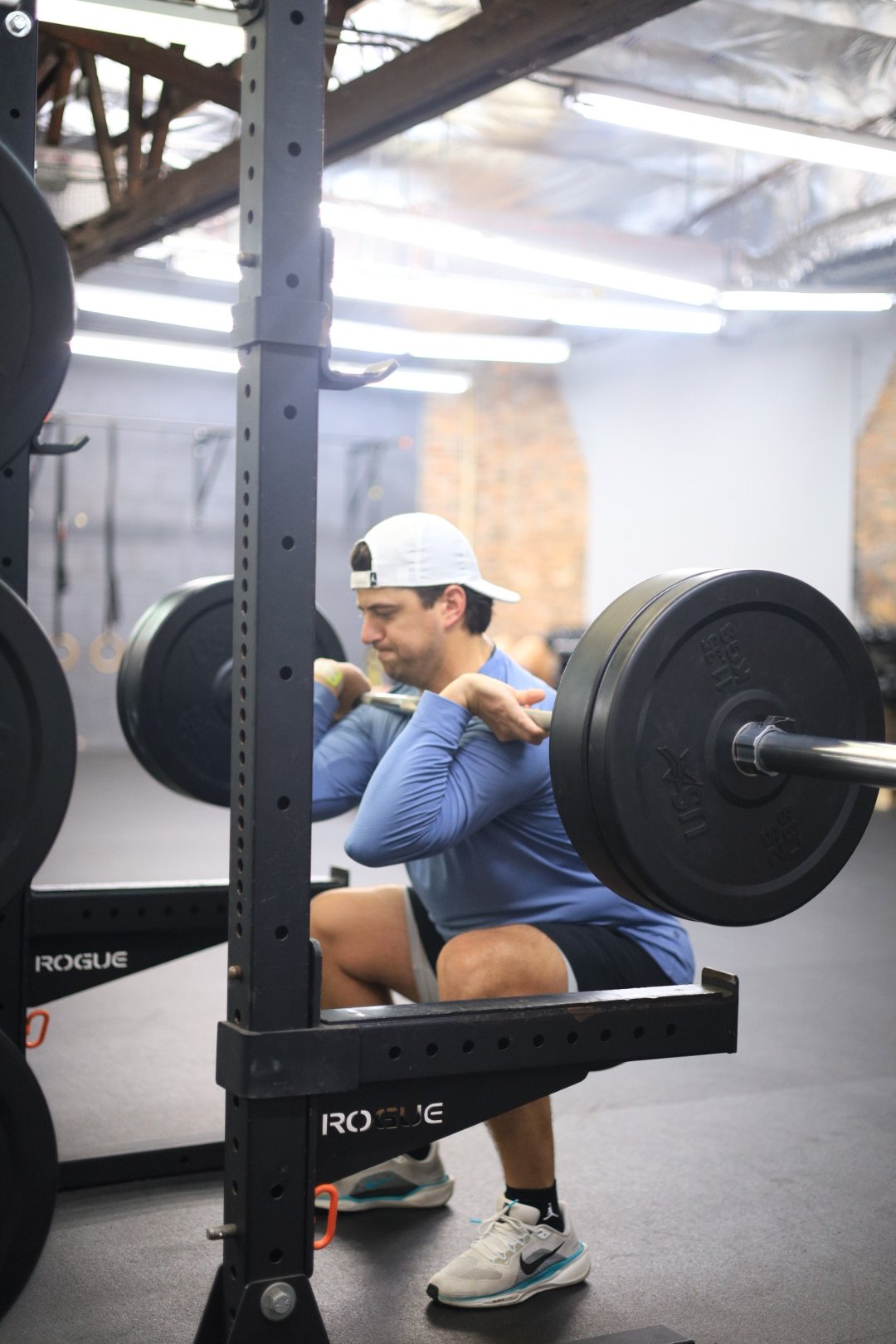
I see a lot of training environments where people chase fatigue.
More sweat.
More intensity.
More exhaustion.
More strain.
But very few people are paying attention to how they move.
At Perform24, movement quality isn’t an afterthought.
It’s the starting point. It’s literally built into our first few training sessions.
Because we know that quality movement creates strength.
It is THE variable.
Strength Starts With Conscious Movement
We train some seriously strong individuals at Perform24. We have multiple 500lb+ dead lifters, 400lb+ squatters, and 300lb+ bench pressers. We’ve seen 600lb sled pushes, 123lb Kettlebell Swings, and ½ bodyweight weighted pull-ups.
But, before we worry about how much weight is on the bar, we pay attention to how the body moves.
How you squat.
How you hinge.
How you press.
How you pull.
Good movement patterns allow the body to produce force safely and also efficiently.
Poor movement patterns create compensation. Compensation is not only inefficient, less stable, and weaker, but compensation can eventually become:
Tightness.
Dysfunction.
Injury.
This is why we emphasize conscious movement during training.
Not just going through the motions.
But actively feeling the movement.
Owning each position.
Controlling every rep.
(This is also the reason we don’t have any mirrors in our gym. We force movement awareness.)
At Perform24 we believe the weight should be earned — not rushed.
Movement Quality Is Progress
Most people only think of progress as adding weight.
And adding weight does matter.
But it’s not the only sign of improvement.
Progress also looks like:
A deeper squat with control.
A bench press without a shoulder pinch.
A hinge that loads the hips instead of the lower back.
A core that stabilizes instead of collapsing.
These improvements matter.
Because when your movement improves, your capacity for strength increases.
Strength training is not just about effort.
It’s about skill.
Movement Quality Is the Most Overlooked Progress Marker
Movement improvements aren’t always flashy.
They aren’t as objective as an InBody improvement.
They aren’t as exciting as a new personal record on a lift.
But they may be the biggest indicator that performance is improving.
These changes aren’t always obvious on our “Performers of the Week” Whiteboard.
But they create the foundation that allows strength to grow safely and consistently.
At Perform24 we often say:
The weight should be earned.
We encourage load. But we don’t rush load.
We build the movement first.
Then we layer strength on top of it.
Technical Skill Exists in Every Sport
Every sport recognizes the value of technical proficiency.
Golfers work on swing mechanics.
Baseball players refine hitting mechanics.
Football players train footwork, acceleration, and agility patterns.
No one questions the value of technical practice in sport.
But when people walk into the weight room, they often abandon that same mindset.
Instead of practicing movement skill, they chase fatigue and heavier loads.
The irony is that strength training is also a technical skill.
And the athletes who move best are almost always the ones who eventually become the strongest.
Movement Quality Doesn’t Go Viral
No one posts their improved lateral lunge pattern on Instagram.
It’s not flashy.
It’s not a highlight moment.
But that improvement might be the exact thing that leads to:
Greater strength.
Better durability.
More athletic movement.
And fewer injuries.
Movement quality may not be the most visible marker of progress.
But it’s often the most important one.
Focus on the Rep, Not the Weight
If you train with us, we’ve got you.
Our coaches are watching your movement, adjusting your positions, and making sure every rep moves you forward.
But if you’re reading this and training somewhere else, here’s a simple rule:
Focus on the quality of the rep.
Slow down.
Feel the movement.
Own the position.
Film your movement and watch it back. Critique your own patterns.
Don’t rush to add weight.
The weight will come.
Strength built on quality movement lasts longer and carries far less risk of injury.
This is also why consistency in strength training matters more than intensity.
Better Movement Unlocks Better Results
Once the body moves well, strength begins to build naturally.
Load increases.
Training becomes more productive.
And over time:
Body composition improves.
Injuries decrease.
The body simply feels better.
This is the long game of strength training.
Not chasing fatigue.
But building a body that moves well, produces force, and holds up under stress.
Coaching Makes the Difference
Movement quality is difficult to assess on your own.
It takes an experienced eye to notice:
Small compensations.
Shifts in balance.
Loss of stability.
Breakdowns in technique.
At Perform24, our semi-private model allows us to coach movement in real time — not just assign workouts.
Because better movement leads to better strength.
And better strength leads to a body that performs well for years.
What Are You Training?
If your training only measures sweat or exhaustion, you’re potentially missing a big piece.
If you’ve experienced a plateau, the breakthrough may come through a technical tweak.
Strength is built on quality movement.
And moving better is progress.
Train hard.
Live full.
Move well.
— Levi