
We Don’t Chase Fat Loss. But it Happens Anyway.
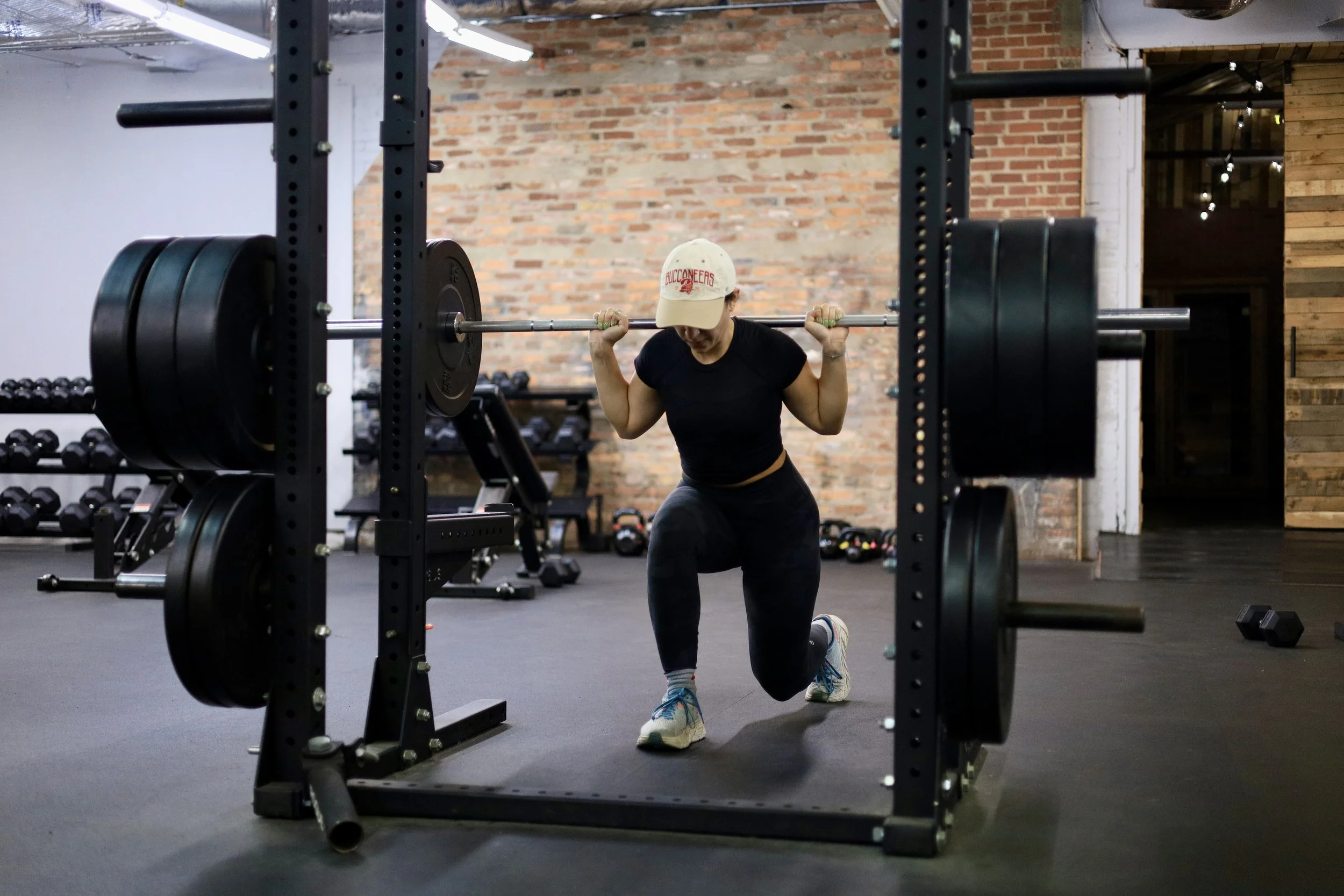
Body composition improvements often happen as a byproduct of consistent strength training—not chasing fat loss.
Most people don’t walk into our gym saying they want to lose weight.
Instead, we hear things like:
"I want to feel stronger."
"I have a bad back."
"I used to be very active."
"I want to feel capable again."
Fat loss is rarely at the top of the priority list.
But something interesting happens once people start training the right way.
Their body composition improves anyway.
Not because we chase fat loss.
Because we build strength first.
The First Changes Aren’t What People Expect
In the early weeks, most people aren’t noticing dramatic changes in the mirror.
What they notice instead is how they feel.
We hear things like:
"I have never squatted like this in my entire life."
"I feel better now than I did 10 years ago."
"My knee legitimately hasn’t hurt in weeks."
After all, movement quality and general strength improvements are typically our initial goal.
Many of the aches and problem areas that brought people in begin resolving themselves. Positions get cleaner. Reps feel smoother. Training becomes more productive.
This is the process of building a foundation.
The 90-Day Check-In
One of the first things we do when someone starts training with us is schedule their 90-day check-in.
Not later.
Day one.
We put that pin on the map immediately.
Because progress doesn’t happen randomly. It happens over time.
At that 90-day check-in we run an updated InBody scan.
And this is where things can get interesting.
Bodyweight might drop a little—often 2 to 5 pounds. (Not 12 or 15 or 20lbs like the Instagram Influencers promise)
And that’s a good thing.
Because the goal usually wasn’t about just losing weight.
Our primary goal was usually functional, not cosmetic or aesthetic.
Improving body composition was a secondary objective.
When we look at the 90-Day results, we often see:
Muscle mass increasing
Fat mass decreasing
Body fat dropping by 3–5%
One of the most exciting moments—especially for our women—is seeing +2 to 3 pounds of muscle mass on their 90-Day scan.
That’s usually when the realization hits:
Fat loss wasn’t the goal. But it happened anyway.
What the Scale Misses (A Realistic Example)
Here’s a simple example we see all the time.
Let’s say someone trains consistently for 90 days.
They aren’t chasing fat loss.
They’re focused on getting stronger, moving better, and staying consistent.
At their 90-day check-in, their InBody results may looks like this:
+2.5 pounds of muscle mass
–7 pounds of fat mass
That’s a seriously meaningful shift.
That’s nearly a 10lb body composition transformation.
But when they step on a standard bathroom scale, they only see:
–4.5 pounds
(Remember, this is after 3 months of consistent work)
That doesn’t look dramatic.
And if the scale is the only thing they’re watching, they might assume progress has been slow.
But the composition tells a completely different story.
They’ve added muscle.
They’ve reduced fat.
Their body has changed in ways the scale alone can’t show.
That’s enough to make clothes fit differently.
That’s enough to change how someone feels in their body.
That’s enough that family members and co-workers notice.
And here’s the important part:
We weren’t even training to optimize fat loss.
The body composition changes happened as a byproduct.
A bonus result of doing the right things consistently.
Here’s an example of what this kind of change can look like on a real 90-day InBody scan from a Perform24 member.
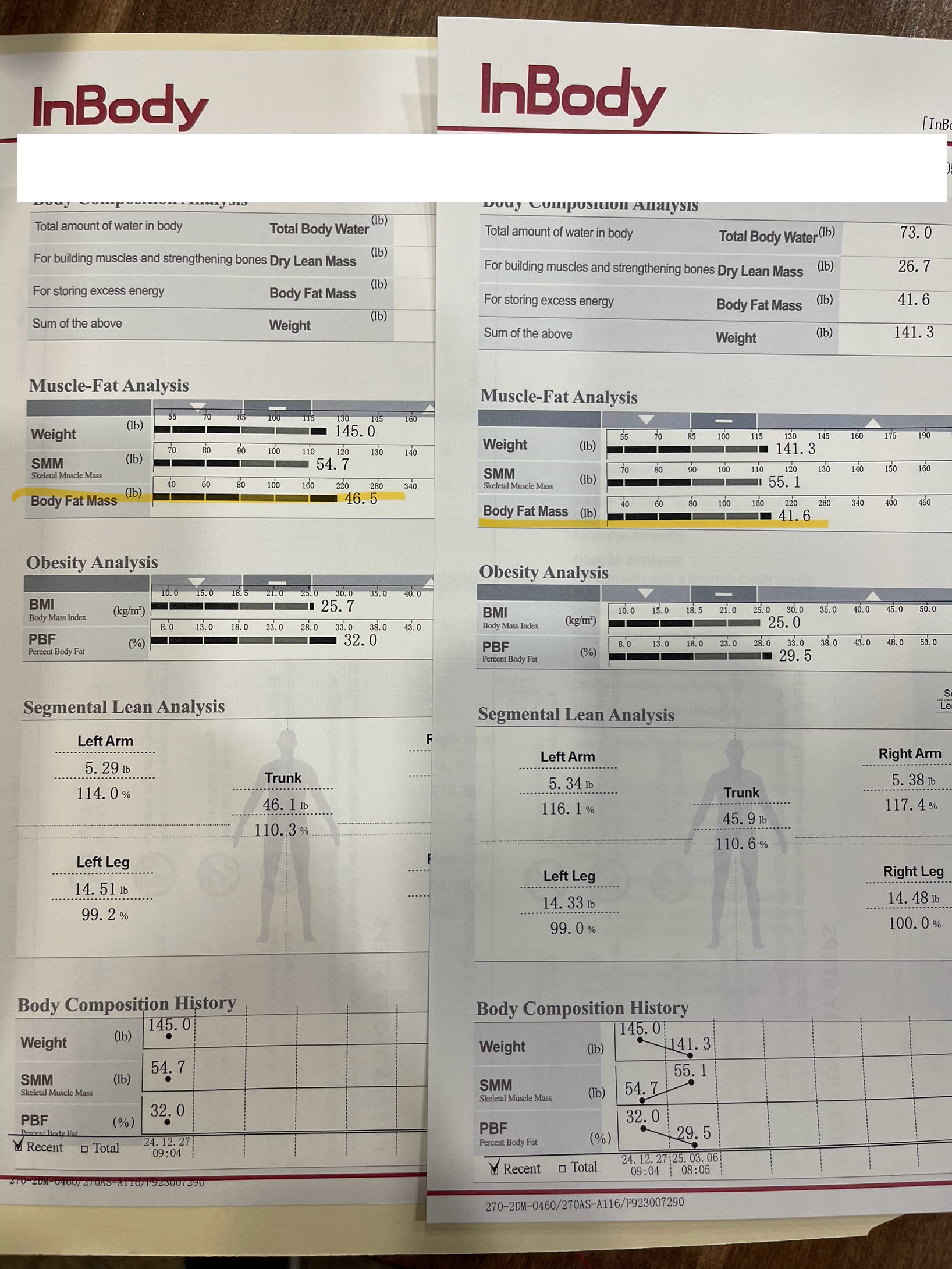
90-Day Body Composition Progress
Notice how the scale change is modest, but the composition change is meaningful. Body Fat Mass lost is highlighted in yellow.
What Happens After the First 90 Days
That first formal check-in often changes everything.
Once people see measurable progress, something shifts subconsciously..
For many, it’s the first time they’ve experienced real training results in their life.
Confidence and motivation can take another big jump.
And training becomes more focused.
By this point, many of the initial aches and concerns that brought them in have started to clear up.
And then we go back to the drawing board as coaches and dial up their programming. Sometimes their training gets even more detailed.
This is by design.
Our people now have proof they can make progress and they find an extra gear to double down.
Fat Loss Happens When You Train the Right Way
We don’t chase fat loss.
We build strength.
We focus on movement quality.
We stay consistent.
And over time, body composition improves as a result.
Not overnight.
Not dramatically.
But meaningfully.
Sustainably.
Predictably.
The Pride That Comes From Seeing It in the Numbers
One of the most rewarding parts of this process isn’t just how people feel.
It’s that seeing the numbers confirm the work.
Many of the early changes—less pain, better movement, more power—are hard to quantify.
They’re incredibly important, but they’re not always easy to measure.
You feel them.
You notice them.
You live them.
But then comes the moment when the data reflects the effort.
When someone sees:
+2 to 3 pounds of muscle mass.
3–5% body fat reduction.
Fat mass trending down.
That’s when pride really sets in.
Not because the numbers define success.
But because they validate it.
Because they prove that the consistency, the effort, and the patience were worth it.
That’s when someone realizes:
Their back doesn’t hurt anymore.
They’re stronger than they’ve been in years.
Their body is changing without obsessing over it.
Fat loss wasn’t the primary goal. But the results became undeniable anyway.
Train hard.
Live full.
- Levi