
The Ebbs and Flows of Long-Term Training
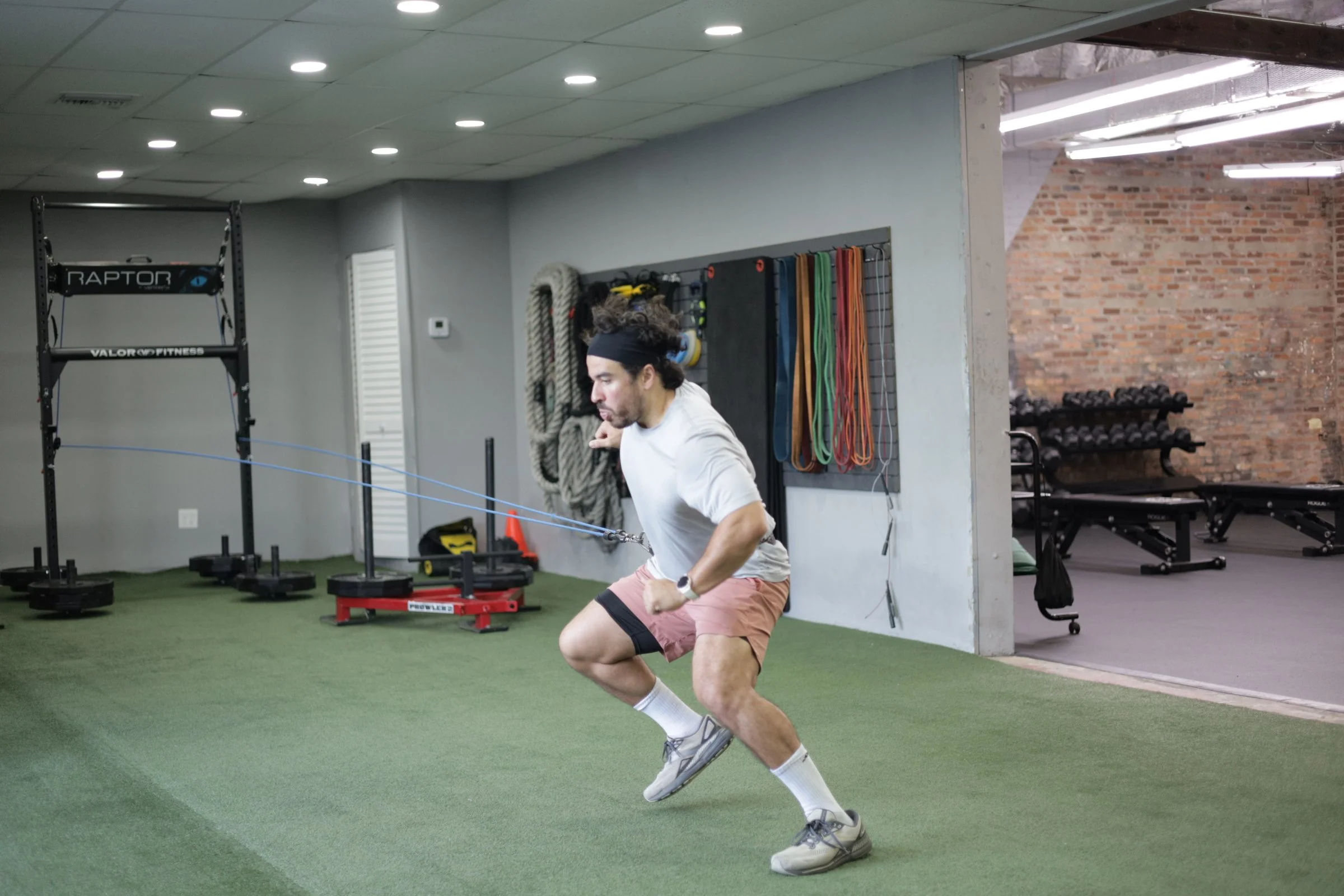
If you've been training consistently for years, I’m sure you have gone through “different versions of yourself.” Take a quick second and think back through some of those days.
There were probably stretches when you were stronger than you are today.
Maybe there were periods when your conditioning was exceptional.
Times when you were leaner.
Times when you played tennis better.
That's not a flaw in the process.
That's what long-term training actually looks like.
You Can't Prioritize Everything Always
I think Instagram fitness has created this misconception.
Or maybe YouTube fitness. Or maybe it’s all the hybrid athletes (just kidding!)
It’s not impossible. But it is very uncommon and it requires a ton of programming nuance to progress in every single physical quality. Online programs promise the world.
Get stronger.
Improve your conditioning.
Build muscle.
Lose body fat.
Run faster.
Move better.
Become more explosive.
Improve your aerobic capacity.
Fix the shoulder that's been bothering you.
And while you're at it, make sure you're recovering perfectly from all of it.
All at the same time with the same program!
That's a lot to ask from a few hours of training each week.
Especially when you're also trying to have a career, raise a family, travel, sleep, eat well, and live a normal life.
You can train a lot of things at once. You can't prioritize every outcome at once.
Training Has Seasons (We call them Phases)
Good long-term programming has an ebb and flow to it.
There are periods (Phases) when we push your strength.
We might increase the amount of heavy lifting, spend more time around the major compound movements, and really push you to add weight to the bar. In that pursuit, sometimes we need to allow other qualities to move into maintenance mode.
Then the emphasis might shift again.
Maybe you sign up for a race and conditioning becomes more important. Strength doesn't disappear, but we don't need to chase a personal record every week. We maintain much of what we've built while putting more training resources somewhere else.
The same thing can happen with body composition.
Or power.
Or mobility.
Or muscle mass.
Sometimes the emphasis isn't performance at all.
Sometimes the goal is simply to feel good, train consistently, and get healthy.
The priorities change because life changes. AND because good training requires us to decide what deserves the most attention right now.
Programming in Phases
This philosophy is one of the reasons we program for our members in 3–6 week phases.
Each phase has a definitive start and finish.
Within that window, we can establish specific priorities, select exercises around those priorities, and build intentional progressions and adaptations from week to week.
But the individual phase isn't the whole program.
It's one piece of a much larger training season. At Perform24 we use the term Phase Design.
A strength-focused phase might lead into another phase that continues developing strength with different movements or loading strategies. Eventually, the emphasis might shift toward conditioning, work capacity, body composition, mobility, or another priority.
When we string those phases together, we can create a cohesive training season that progresses over several months.
And when we string those seasons together?
That's long-term athletic development.
The goal isn't to randomly change workouts every few weeks.
The goal is to know what we're trying to accomplish during this phase, understand how it connects to the previous one, and have an idea of where we're heading next.
Goal Reviews Help Set the Direction
Of course, training doesn't happen in a vacuum.
Your life in August might look very different from your life in January.
Your goals might be different too.
That's why we run Goal Review sessions with our members throughout the year.
We have a baked-in cadence for Goal Reviews in January, May, and August.
These are more formal sit-downs where we can update InBody scans, review the previous few months of training, discuss what's working, and establish the direction for the months ahead.
Because things change.
Those conversations should influence the training that comes next.
A good program shouldn't blindly follow a plan created six months ago when the person standing in front of us has changed.
The Goal Review gives us an opportunity to zoom out, reassess, and make sure the upcoming training season reflects where you are now.
Develop. Maintain. Restore.
Even when the emphasis changes, we don't simply abandon everything else.
If strength isn't currently the priority, that doesn't mean we stop lifting.
If conditioning isn't the priority, that doesn't mean we stop getting our heart rate up.
If we're trying to add muscle, that doesn't mean mobility suddenly doesn't matter.
Instead, we adjust the dose.
Some qualities are being developed.
Others are being maintained.
And occasionally, something needs to be restored.
That might be the simplest way to understand intelligent long-term programming:
Develop. Maintain. Restore.
Those categories are constantly shifting.
A quality we're developing today may only need to be maintained six months from now.
Something we've maintained for years might suddenly deserve more attention.
An injury, layoff, or change in lifestyle might require us to restore something we've lost.
Over a long enough timeline, almost everything gets its turn.
Zoom Out
This becomes much easier to understand when you stop judging your training one workout or one week at a time.
Think about the different levels.
A workout fits into a phase.
A phase fits into a season.
A season fits into years of training.
At each level, we're trying to make decisions that support the bigger picture.
If you're going to train for decades, does it really matter if your squat isn't at its absolute strongest while you're preparing for a half marathon?
Does it matter if you're carrying a few more pounds while you're spending several months trying to build muscle and get stronger?
Does your conditioning need to be at an all-time high during a phase when you're rebuilding from an injury?
Probably not.
What matters is that the overall trajectory continues moving forward.
Train for the Long Haul
Long-term athletic development is a phrase we often associate with young athletes.
But it applies just as much to adults.
You don't stop developing as an athlete because you're 35, 45, 55, or beyond.
The timeline just gets longer.
Over years of intelligent training, you accumulate physical qualities that become part of your foundation.
Strength.
Muscle.
Aerobic capacity.
Movement quality.
Coordination.
Resilience.
And perhaps most importantly, an understanding of your own body and what it needs.
The goal isn't to reach some mythical point where every physical quality is simultaneously at its lifetime peak.
The goal is to keep building an increasingly capable body while allowing your training to evolve alongside your life.
There will always be an ebb and flow.
That's not inconsistency. That's the process.
Train for the phase you're in.
Keep enough of what you've built.
Know when it's time to change the emphasis.
Then keep going.
That's what training for the long haul looks like.
Train hard.
Live full.