
What Eric Cressey and Mike Boyle Taught us About Youth Athletic Development
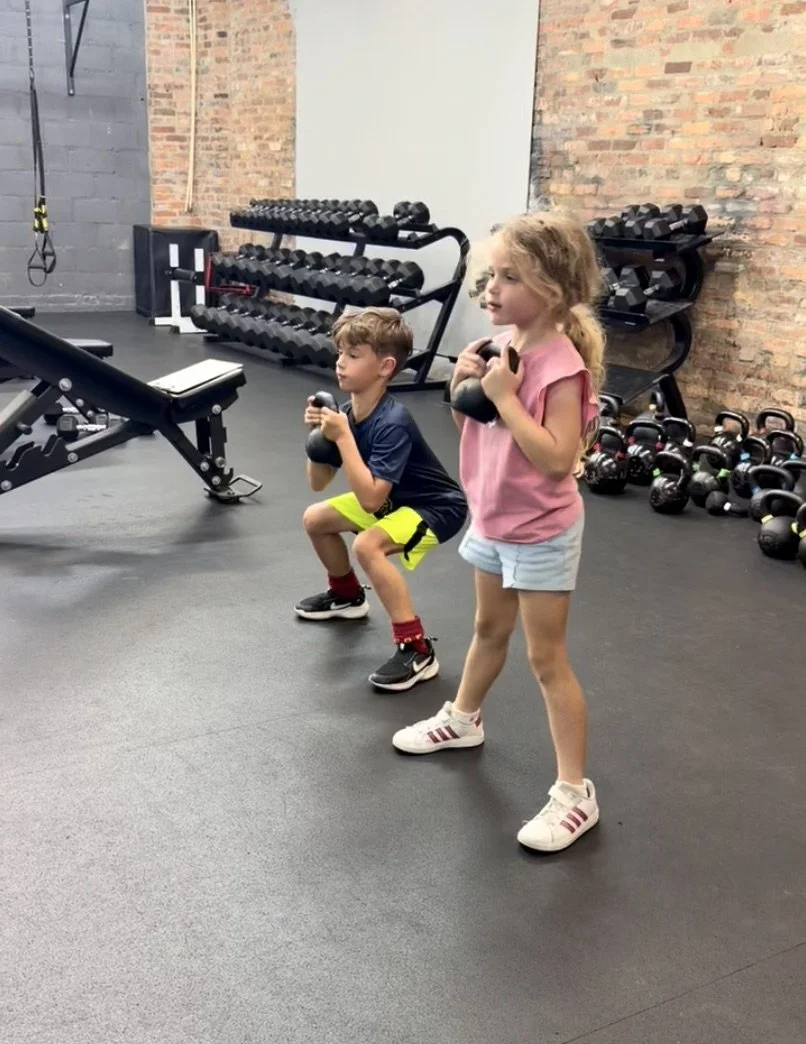
As both a coach and a father of two young athletes, I've been thinking a lot about youth athletic development lately.
My son is seven. My daughter is six.
We're entering the world of youth sports ourselves, and many of the questions I'm asking for my own children are the same questions parents ask us every day at Perform24.
How much is too much?
When should they specialize?
Should they be strength training?
How do we help them become better athletes without burning them out?
Over the last two decades, few coaches have influenced my thinking on these topics more than Eric Cressey and Mike Boyle. While they come from different backgrounds and have worked with different athlete populations, both have helped shape modern athletic development and performance training.
And despite coaching athletes at the highest levels of sport, their message for young athletes remains remarkably simple:
Build athletes first. Build specialists later.
It's a philosophy we strongly believe in at Perform24.
Who Are Eric Cressey and Mike Boyle?
Eric Cressey
Eric Cressey is one of the most respected strength and conditioning coaches in professional baseball. He is the co-founder of Cressey Sports Performance, a facility that has trained hundreds of professional baseball players, including numerous Major League Baseball All-Stars, Cy Young Award winners, and first-round draft picks. He is also the current Director of Player Health and Performance for the New York Yankees.
Cressey is widely recognized for his expertise in athletic development, shoulder health, throwing athletes, and long-term performance training.
Despite working with some of the best athletes in the world, his message for young athletes is straightforward:
Develop movement quality before chasing performance metrics.
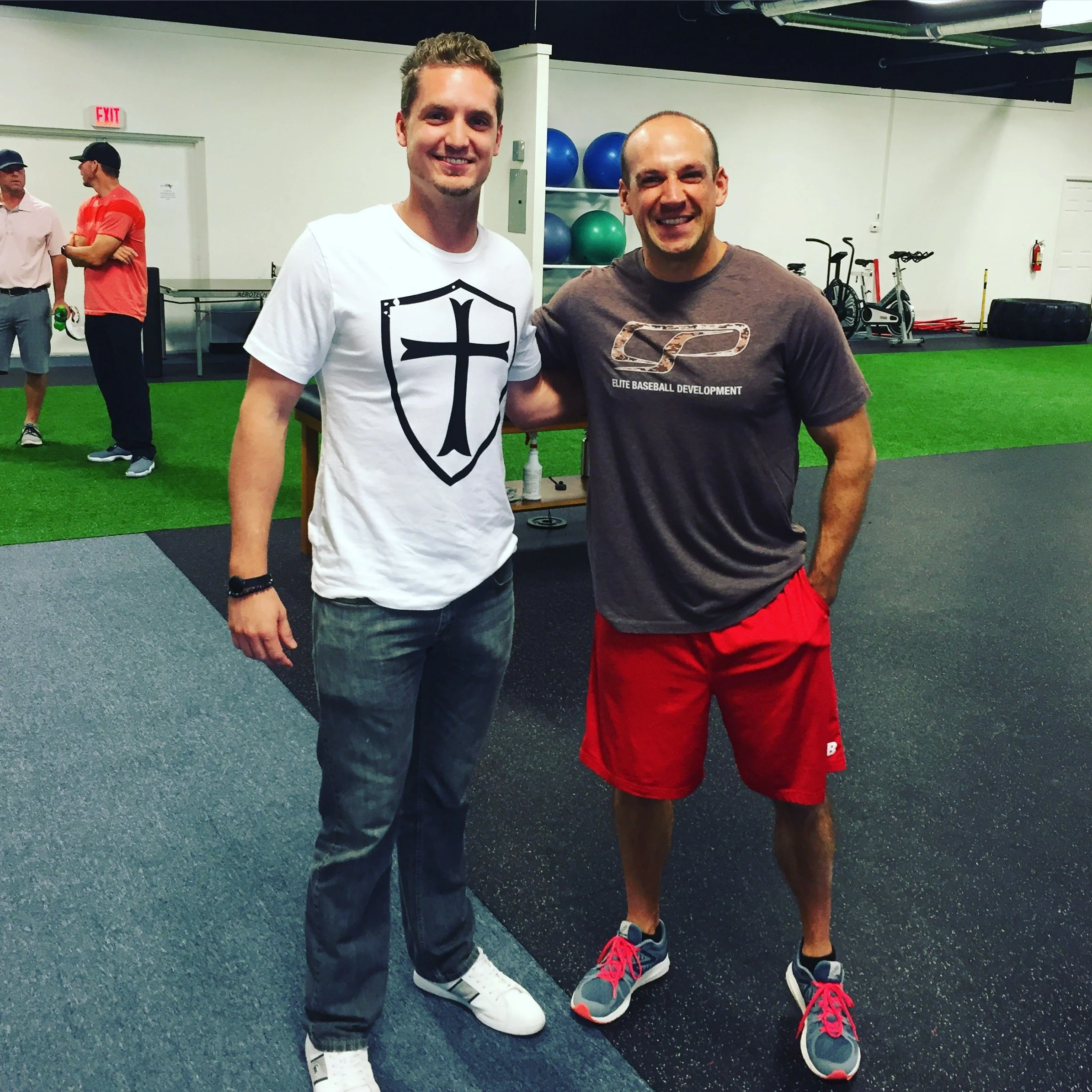
Eric Cressey has been one of the most influential coaches in my professional development. This photo was taken in October 2015 during one of several visits to Cressey Sports Performance.
Mike Boyle
Mike Boyle has spent more than four decades coaching athletes at nearly every level of sport.
He served as the strength and conditioning coach for Boston University Hockey, worked with the Boston Red Sox organization, and founded Mike Boyle Strength and Conditioning, one of the most influential performance facilities in the country. His
Many concepts that are now considered standard practice in athletic development were popularized by Boyle years ago.
One of his most well-known coaching principles is:
"Don't strengthen dysfunction."
In other words, if an athlete cannot move well, simply adding more weight, more volume, or more conditioning isn't the solution.
First, we teach movement.
Then we build strength.
The Problem With Early Specialization
One of the strongest areas of agreement between Cressey and Boyle is their skepticism toward early sport specialization.
Today's youth sports culture often encourages children to play one sport year-round at increasingly younger ages. Many parents assume that more practice automatically produces better athletes.
Unfortunately, that's not always true.
Young athletes who spend all of their time performing the same movement patterns often miss opportunities to develop broader athletic skills.
Running.
Jumping.
Landing.
Throwing.
Balancing.
Climbing.
Changing direction.
Reacting to new situations.
These experiences create athleticism.
Athleticism isn't built through repetition alone.
It's built through exposure.
The athletes who experience a wide variety of movements and challenges often develop a stronger foundation than athletes who specialize too early.
Movement Vocabulary: The Foundation of Athletic Development
At Perform24, we often use the phrase movement vocabulary.
Just as children develop language by learning new words, athletes develop athleticism by learning new movement skills. Every sprint, jump, skip, or crawl becomes another phrase in that vocabulary. The larger it becomes, the more options an athlete has when solving problems on the field, court, or in everyday life.
This concept sits at the center of both Boyle's and Cressey's philosophy.
Before strength.
Before power.
Before sport-specific performance.
Comes movement competency.
Is Strength Training Safe For Kids?
The short answer is yes.
Both Cressey and Boyle have consistently advocated for properly supervised strength training in youth populations.
The outdated belief that strength training is dangerous for children has largely been disproven.
Research continues to show that appropriately coached resistance training can improve:
Strength
Coordination
Confidence
Body awareness
Injury resilience
Athletic performance
The key distinction is that youth training should focus on learning movement rather than maximizing load.
A technically sound squat matters more than a heavy squat.
A perfect push-up matters more than chasing numbers.
Young athletes should earn complexity and load through competency.
Technique always comes before intensity.
Funny enough, we preach this exact same concept with our adult athletes. You can read more here in my article Earn the Weight: Why Movement Quality Matters in Strength Training.
Training as "Injury Insurance" for Young Athletes
When parents voice concerns about youth weight training, they are usually trying to protect their kids from getting hurt. But the data shows we actually have it backward: it’s not training that poses the greatest risk to young athletes; it’s early sport-specialization without a physical foundation.
When a child plays one sport year-round, they perform the exact same repetitive motions thousands of times. A youth baseball pitcher throws constantly; a soccer player changes direction on the same leg thousands of times a season. Without intervention, these repetitive patterns lead to chronic overuse injuries, growth plate micro-trauma, and muscle imbalances.
Properly supervised strength and movement training acts as physical armor. By teaching a young athlete how to properly absorb force when landing a jump, how to decelerate safely during a sprint, and how to stabilize their core, we are effectively giving them "injury insurance" for their sport.
We aren't just building faster or stronger kids. We are building durable kids who can withstand the intense demands of modern youth sports leagues.
What Training Should Look Like at Different Ages
Ages 5–8: Learn To Move
At this stage, training should be fun, engaging, and exploratory.
Children benefit most from opportunities to:
Run
Jump
Skip
Throw
Catch
Crawl
Balance
Climb
Change direction
The goal is not fitness.
The goal is physical literacy.
This is where athletic foundations are built.
Perform24 offers a training group for our youngest athletes on Mondays.
Project: Speed (Ages 5-8)
Ages 9–12: Learn To Train
As coordination improves, athletes can begin learning foundational training patterns.
This may include:
Squats
Hinges
Push-ups
Rows
Carries
Sled work
Medicine ball exercises
The objective remains skill acquisition rather than performance optimization.
We're teaching athletes how to train.
Perform24 offers a group for our developing athletes on Wednesdays.
Project: Strong (Ages 10-14)
Ages 13–15: Build Capacity
As athletes mature physically, strength, speed, power, and conditioning become increasingly trainable.
Because movement foundations have already been established, athletes are now prepared to pursue higher levels of performance safely and effectively.
Ages 16+: Individual Development
At this stage, training becomes more individualized based on sport demands, goals, and physical needs.
The athletes who thrive here are typically the ones who spent years developing broad athletic foundations rather than specializing too early.
Perform24 offers individualized training for athletes of all sports. This individualized training also allows for flexible scheduling. As our athletes enter high school, practice and competition demands can create logistical challenges.Learn more about our individualized youth training here.
Why This Matters To Me Personally
I've spent my entire career coaching athletes.
Over the years, we've had the opportunity to help nearly a dozen athletes reach the highest levels of their respective sports. 7 NFL and Major League Baseball players first walked through our doors while they were still in high school. We've worked with athletes pursuing college scholarships, professional careers, and championship seasons.
What's interesting is that the athletes who ultimately reached the highest levels rarely looked dramatically different from their peers at 10 years old.
They weren't always the biggest.
They weren't always the strongest.
They weren't always the most specialized.
What they consistently possessed was a broad athletic foundation and a willingness to develop over time.
Today, this topic means even more to me because I'm no longer looking at youth development solely through the lens of a coach.
I'm looking at it through the lens of a father.
I began coaching nearly a decade before becoming a father.
My early coaching career closely followed the work of coaches like Eric Cressey and Mike Boyle, and their principles always led me and my athletes to successful outcomes.
But, like any parent, I find myself second guessing the process despite my professional experience. As my own kids are growing, discovering sports, exploring new activities, and starting to compete, I’m also consumed by the “what-ifs” and the “fomo,” of their athletic opportunities.
My wife and I remind ourselves that the answer isn't to do more sport-specific training earlier.
The answer is to build better athletes.
It’s our job to expose them to a wide variety of physical challenges.
To build confidence.
To develop resilience.
And to remember that athletic development is measured in years and not weekend tournaments.
How We Apply These Principles At Perform24
At Perform24, our youth development programs are built around many of the same principles advocated by coaches like Eric Cressey and Mike Boyle.
We want young athletes to become more capable movers before we ask them to become better specialists.
We prioritize:
Movement quality
Coordination
Strength development
Speed mechanics
Body control
Confidence
Long-term athletic development
That's why you'll see our athletes sprinting, carrying, jumping, balancing, crawling, throwing, and learning foundational strength skills.
We don't view youth training as preparation for next weekend's game.
We view it as preparation for the next decade.
Whether a young athlete eventually becomes a varsity athlete, earns a college scholarship, reaches the professional ranks, or simply develops a lifelong love for movement, the foundation remains the same.
Build the athlete first.
Everything else comes later.
Youth athletic development is about building movement competency, confidence, coordination, and strength before specialization. Here's a look at how we help young athletes develop at Perform24 in Tampa.
The Long Game
The best youth training programs aren't measured by how exhausted a child feels at the end of a session.
They're measured by what that athlete becomes years later.
Eric Cressey and Mike Boyle have spent their careers proving that athletic development is a long-term process.
The strongest athletes are rarely the ones who specialized earliest.
They're often the ones who built the broadest foundation.
Athleticism is not something we're born with or without.
It's something we develop.
At Perform24, that’s exactly where we begin.
About the Author
Levi Jaeckel is the founder of Perform24 in Tampa, Florida. A Certified Strength and Conditioning Specialist (CSCS), Levi has coached athletes ranging from youth beginners to NFL, MLB, NHL, and professional soccer. He is also the father of two young athletes and is passionate about helping kids develop a lifelong love for movement.